
Multi-chain assets
A unified interface still keeps each chain’s assets, gas and transaction state distinct.
From multi-chain assets and network selection to transfers, DApps, approvals and security, imtoken helps users understand every on-chain action.
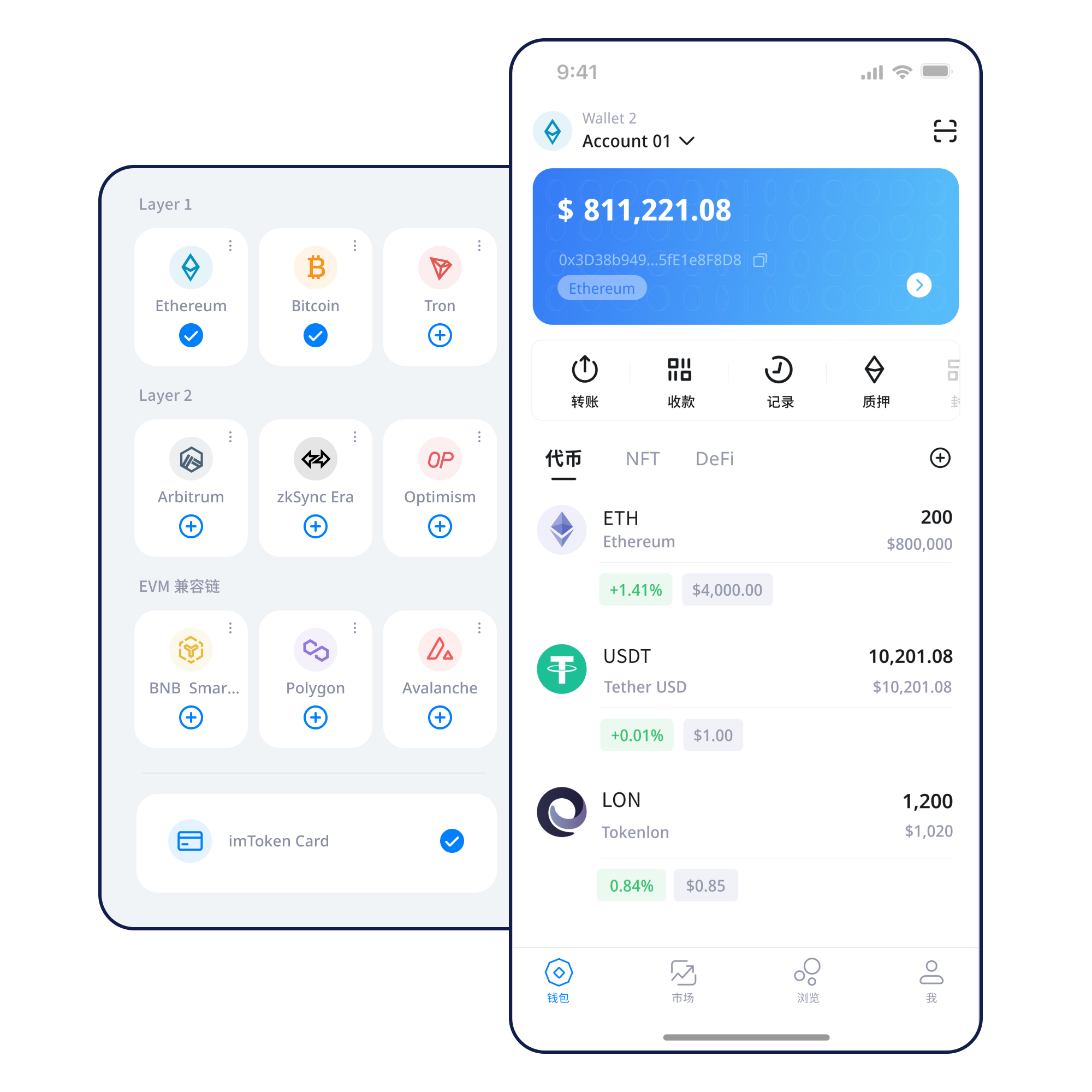
Create from a trusted source and understand addresses and recovery material.
View steps →Keep the seed phrase offline, not in chat or unknown webpages.
View steps →Confirm the network first, then copy and verify the address.
View steps →Check the network, address, amount, gas and transaction hash.
View steps →Verify the domain, account, signatures and approvals.
View steps →A unified interface still keeps each chain’s assets, gas and transaction state distinct.
View assets, switch networks, send transactions and review history on mobile.
Verify network, address, amount and gas, then keep the transaction hash.
Treat connections, signatures, transactions and approvals separately.
Keep seed phrases and private keys offline and never share them.
A unified entry point can show several networks, while every chain still has separate assets, gas and transaction state.
Learn more →Public chains maintain state through nodes, blocks and consensus, and transaction hashes can be verified independently.
Learn more →
EVM compatibility provides similar contract execution patterns, while chain IDs, gas assets and deployments remain independent.
Learn more →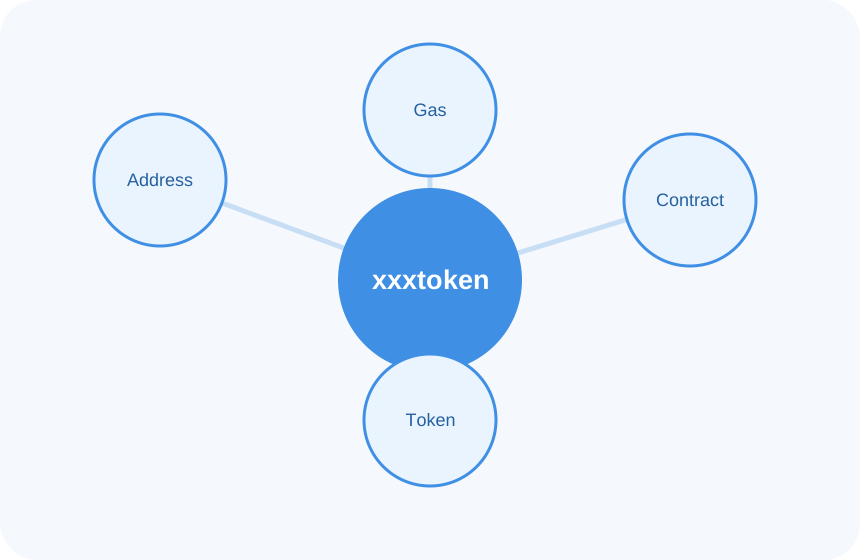
Layer 2 systems may use bridges, proofs and different settlement designs to move state or assets, with exit timing varying by system.
Learn more →
Gas reflects execution-resource cost, while confirmations describe increasing settlement confidence after block inclusion.
Learn more →Use a trusted entry point.
Verify the application source.
Keep the seed phrase offline.
Confirm the asset chain and gas.
Check address, network and amount.
Save transaction hashes and remove unneeded approvals.
Review every signature and approval separately.
Support will not request seed phrases, private keys or verification codes. Check address, network and amount before transfers. Third-party DApps and smart contracts may carry risk.
Open Security Center →Start with addresses, seed phrases, private keys, networks, gas, transaction hashes, DApps and approvals so wallet use becomes understandable and verifiable.
Understand nodes, blocks and confirmations.
Understand chain IDs, gas and contract addresses.
Learn bridges, settlement and exits.
Separate connection, signing and approvals.
Build backup and verification habits.
Connect common terms.
Rewards can change, exits may involve waiting, and validators can face protocol penalties.
Learn more →Staking does not guarantee returns; contracts, third-party services and digital asset prices all carry risk.
Refined wallet creation, backup and verification guidance.
Expanded EVM, Layer 2 and gas materials.
Reinforced separate checks for seeds, signatures and approvals.
Troubleshooting starts with public information.
Assets are recorded on the blockchain; the wallet manages addresses, signatures and chain access.
No. Legitimate support does not request seed phrases, private keys or verification codes.
Because every network maintains separate asset state.
Gas is the network mechanism that prices transaction and contract execution resources.
No. Review signatures, transactions and approvals separately.
Different Layer 2 systems use different settlement or synchronization mechanisms.
No. Rewards and digital asset prices can change.
All download entries lead to /download.html.